Personal profile: Patrizia Polverino De Laureto
Patrizia Polverino De Laureto
| Country: | Italy |
|---|
Courses
Lecture 1, December 2, h 14.30-16.30,
1- What are Nanobodies? This part will explain how Nanobodies were discovered and give an overview of the unique properties of Nanobodies compared to those of conventional antibody fragments such as Fab, and ScFv.
2- How Nanobodies are generated and characterized? This lecture will introduce the different steps involved to generate and select Nanobodies against a given antigen, and to characterize them in term of affinity, specificity, epitope mapping, stability using various a range of technics including ELISA, SPR, Biolayer interferometry, ITC, fluorescence and circular dichroism
Lecture 2, December 4h 14.30-16.30,
How to engineer Nbs to further adapt their properties to the applications: creation of multivalent/multispecific Nanobodies, creation of chimeric Nbs (fusion with toxins, enzymes, etc.). We will discuss protein engineering strategies to improve the pharmacokinetics of Nbs and to label them for in vivo imaging.
Therapeutic, diagnostic and biotechnological application of Nanobodies, part 1
Lecture 3, December 6, h 14.30-16.30,
Therapeutic, diagnostic and biotechnological applications of Nanobodies, part 2
- Teacher: Patrizia Polverino De Laureto
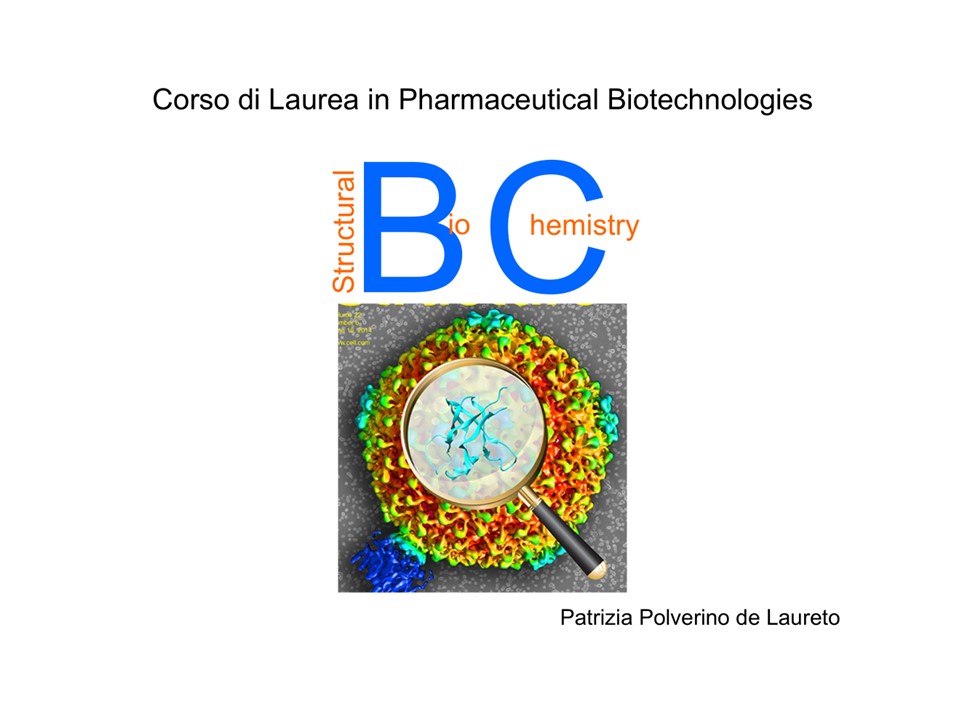
Structural Biochemistry is a branch of the life sciences that combines biology, physics, and chemistry, to study living organisms and to summarize some principles that rule the living cells.
he course aims to provide an understanding of the major concepts in the ambit of protein structure and folding at the molecular level, as well as to show the most useful and modern techniques to determine the structure and dynamics of proteins.
- Teacher: Patrizia Polverino De Laureto
In this thematic course we will explore the process of photosensitisation and we will survey how it can be exploited for therapeutic, biological and environmental applications.
This is an overview of the three sessions:
1) Photosensitisation
2) Medical applications of photodynamic processes: from therapy to drug delivery
3) Photodynamic processes as investigative tools, sensors and environmental remediation agents
- Teacher: Laura Acquasaliente
- Teacher: Patrizia Polverino De Laureto
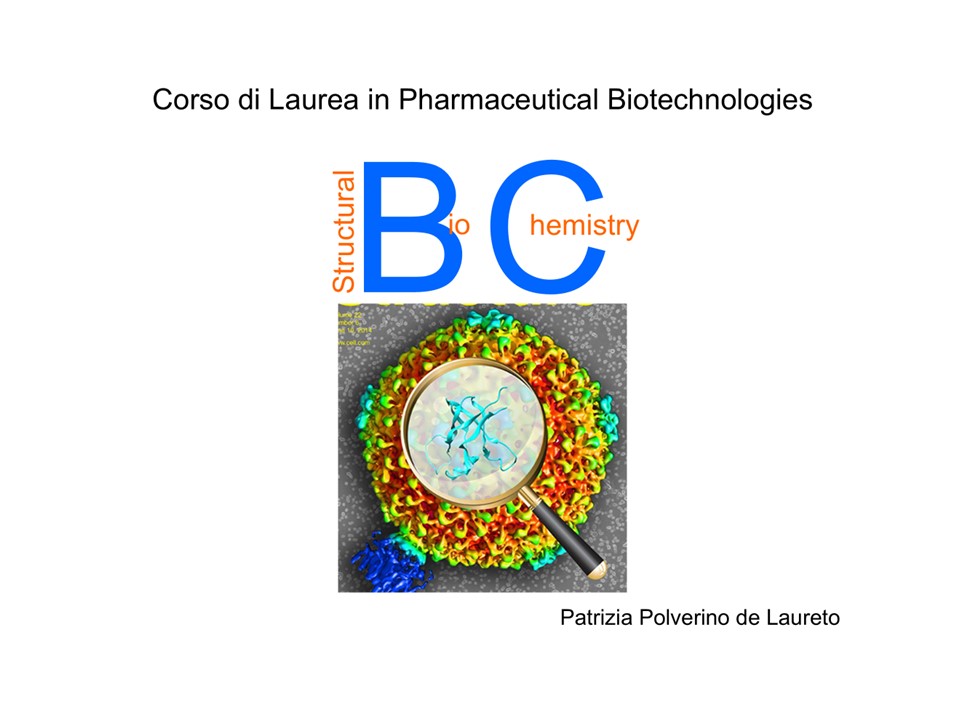
The course aims to provide an understanding of the major concepts in the ambit of protein structure and folding at the molecular level, as well as to show the most useful and modern techniques to determine the structure and dynamics of proteins
- Teacher: Patrizia Polverino De Laureto
Lecture 1,
1- What are Nanobodies? This part will explain how Nanobodies were discovered and give an overview of the unique properties of Nanobodies compared to those of conventional antibody fragments such as Fab, and ScFv.
2- How Nanobodies are generated and characterized? This lecture will introduce the different steps involved to generate and select Nanobodies against a given antigen, and to characterize them in term of affinity, specificity, epitope mapping, stability using various a range of technics including ELISA, SPR, Biolayer interferometry, ITC, fluorescence and circular dichroism
Lecture 2,
How to engineer Nbs to further adapt their properties to the applications: creation of multivalent/multispecific Nanobodies, creation of chimeric Nbs (fusion with toxins, enzymes, etc.). We will discuss protein engineering strategies to improve the pharmacokinetics of Nbs and to label them for in vivo imaging.
Therapeutic, diagnostic and biotechnological application of Nanobodies, part 1
Lecture 3,
Therapeutic, diagnostic and biotechnological applications of Nanobodies, part 2
- Teacher: Patrizia Polverino De Laureto
- Teacher: Antonella Bertazzo
- Teacher: Chiara Bolego
- Teacher: Marisa Brini
- Teacher: Paolo Caliceti
- Teacher: Girolamo Calo'
- Teacher: Adriana Chilin
- Teacher: Rossano Chinchio
- Teacher: Rocchina Lucia Colucci
- Teacher: Stefano Comai
- Teacher: Stefano Dall'Acqua
- Teacher: Lisa Dalla Via
- Teacher: Vincenzo De Filippis
- Teacher: Michele De Franco
- Teacher: Sara De Martin
- Teacher: Rosa Di Liddo
- Teacher: Alessandro Dolmella
- Teacher: Raffaella Filippini
- Teacher: Erica Franceschinis
- Teacher: Guglielmina Froldi
- Teacher: Valentina Gandin
- Teacher: Barbara Gatto
- Teacher: Maria Cecilia Giron
- Teacher: Cristina Marzano
- Teacher: Francesca Mastrotto
- Teacher: Andrea Mattarei
- Teacher: Giorgia Miolo
- Teacher: Monica Montopoli
- Teacher: Michele Morari
- Teacher: Stefano Moro
- Teacher: Margherita Morpurgo
- Teacher: Andrea Pagetta
- Teacher: Gianfranco Pasut
- Teacher: Cristiano Pesce
- Teacher: Anna Piovan
- Teacher: Patrizia Polverino De Laureto
- Teacher: Luigi Quintieri
- Teacher: Stefano Salmaso
- Teacher: Alessandra Semenzato
- Teacher: Claudia Sissi
- Teacher: Alice Sosic
- Teacher: Barbara Spolaore
- Teacher: Mattia Sturlese
- Teacher: Lucia Trevisi
- Teacher: Morena Zusso
- Teacher: Laura Acquasaliente
- Teacher: Stefano Dall'Acqua
- Teacher: Erica Franceschinis
- Teacher: Valentina Gandin
- Teacher: Maria Cecilia Giron
- Teacher: Elisabetta Groaz
- Teacher: Giorgia Miolo
- Teacher: Michela Paccagnella
- Teacher: Andrea Pagetta
- Teacher: Patrizia Polverino De Laureto
- Teacher: Nicola Realdon
- Teacher: Stefano Salmaso
- Teacher: Veronica Salmaso
- Teacher: Dorianna Sandona'
- Teacher: Barbara Simionati
- Teacher: Alice Sosic
- Teacher: Mattia Sturlese
- Teacher: Giampietro Viola
- Teacher: Mirella Zancato